Yaupon Psyllid

(Updated: March 17, 2025, 11:19 a.m.)
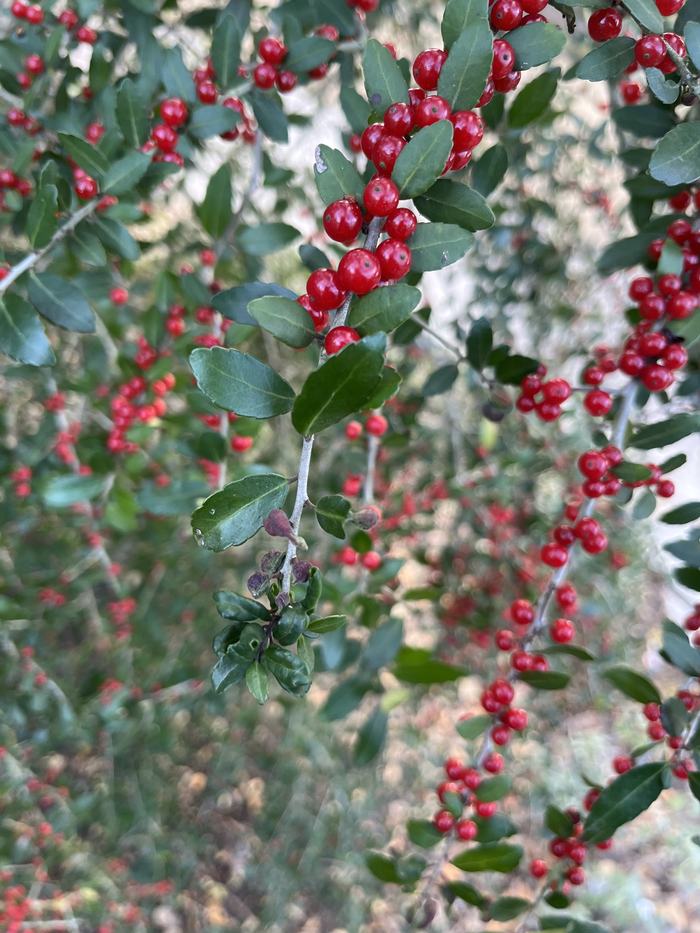
a group of purple leaf galls at the tip of a holly branch
A Yaupon Holly (Ilex vomitoria)[weeping cultivar] branch with a cluster of galls induced by yaupon psyllids (Gyropsylla ilecis).

This week in the Plant Clinic, we observed the yaupon psyllid (Gyropsylla ilecis Ashmead)[Apahalaridae]. It was the first time most volunteers had observed this uncommon native pest. The problem presents as folded, deformed, and purplish distal leaves on yaupon branches. The yaupon psyllid is associated exclusively with Ilex vomitoria, the yaupon holly. It a kind of the order Hemiptera (the true bugs), more specifically a member of the suborder Sternorrhyncha and of the family Aphalaridae. Adult females, after mating, lay pyriform (pear-shaped) eggs at leaf buds on the new growth of a yaupon holly. The larva hatches and begins feeding on the yaupon sap, causing the developing leaf to deform into a gall that encloses and protects the larva as it feeds. The larva secretes a white powdery residue and honeydew droplets while inside. Once the larva reaches its final instar (molt stage), it will split the gall open and emerge. The final molt into adult form takes place outside the gall.

This insect is an aesthetic pest only, as it is not known to reduce plant vigor.
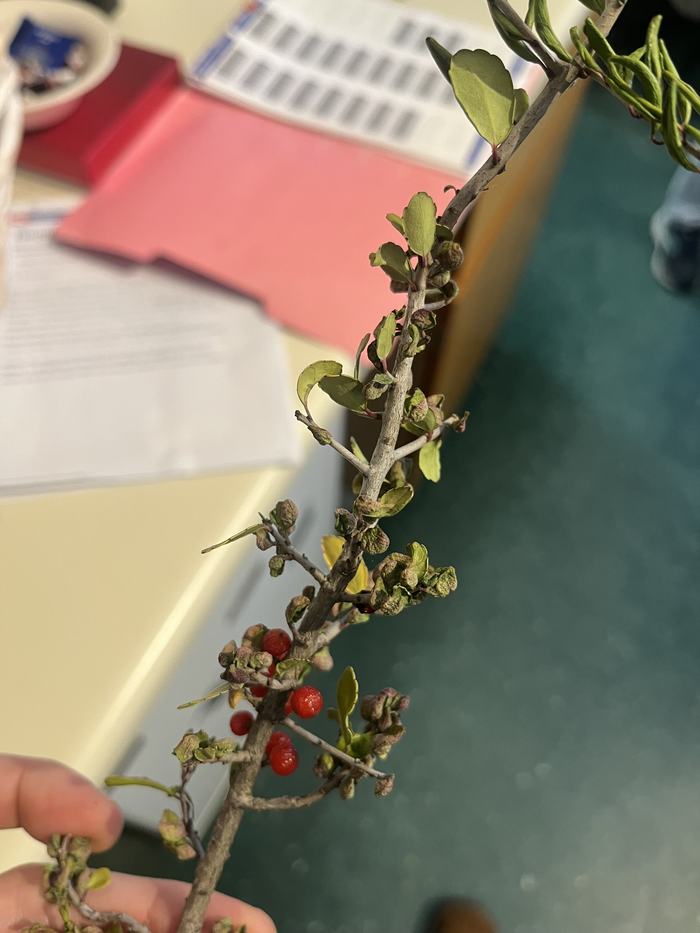
a cut holly branch with berries and shriveled up leaf galls
A proliferation of yaupon psyllid galls on a cutting of wild-type Ilex vomitoria.

Treatment with insecticides is not generally required or recommended, but for plants that must be kept gall-free, foliar sprays are effective in preventing egg-laying. Pruning is an option for gardeners bothered by the galls, or one may choose to simply leave them alone.

Interestingly, the presence of galls on younger leaves may increase the nutritional value of older leaves. Cultivars of yaupon (except for weeping cultivars) are not susceptible to G. ilecis ‘infestation.' In general indigenous pests are often less harmful than introduced ones because their populations are controlled by enemies such as predators and parasitoids that have co-evolved with them. 

For more information on this insect (including great photos), see UF IFAS Extension.

(adapted from Plant Clinic Case Files 01/25/2024)