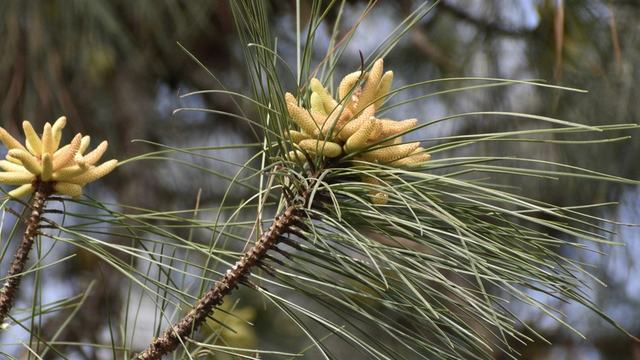
Spring in the Cape Fear region brings beautiful weather, blooming flowers, and that unmistakable yellow film covering everything outdoors. While pine pollen season can be a nuisance for allergy sufferers, it's also a fascinating natural phenomenon you can predict right from home—and it makes a great educational activity for kids!
Each spring, pine trees release billions of pollen grains to pollinate female flowers and produce seeds for the next generation of trees. This reproductive process is essential for North Carolina's forest industry, which contributes over $42.5 billion to our state's economy. Without this annual pollen release, we wouldn't have the lumber and wood products we depend on daily.
Scientists have discovered you can predict when pine pollen season starts using a simple calculation called "degree-days." All you need is the daily high temperature and a way to track your data. This activity teaches kids about phenology—the study of seasonal natural events—while helping families prepare for allergy season.
How It Works
Starting February 1st, track the daily high temperature. Each day, subtract 55°F from the maximum temperature. If the result is positive, add it to your running total. If it's negative or zero, don't add anything for that day.
For example, if today's high is 54°F, subtracting 55 gives you -1. Since that's negative, you add zero to your total. Over the next few days, you might record values of 8, -2, and 15. Adding only the positive numbers (8 + 0 + 15) gives you a cumulative degree-day value of 23.
Pine pollen season typically begins when you reach approximately 300 accumulated degree-days, usually in early to mid-March for the Cape Fear region. Peak pollen production occurs around 636 degree-days, often in early April.
The pine pollen season can last several weeks. Pollen levels are highest early in the morning on warm, dry, breezy days and lowest during cool, rainy periods. A rainy spring or late frost can significantly reduce the amount of pollen in the atmosphere. While you can't avoid pine pollen entirely, predicting when the season peaks helps families plan outdoor activities, schedule car washes, or time allergy medications.
Want to track degree-days without doing the math? Click here to Download the Pine Pollen Tracker Spreadsheet
Resources
For more detailed information about the science behind pine pollen prediction, read the full NC State Extension publication: Predicting the Start of the Pine Pollen Season