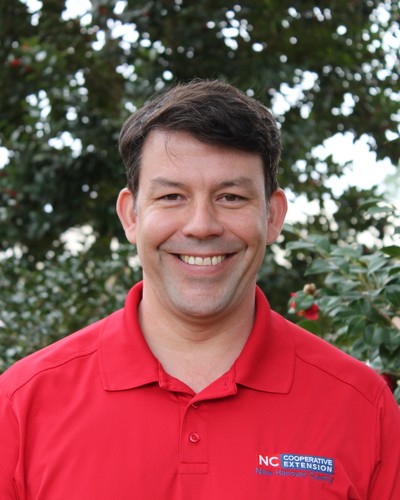
Article contributed by Kat Polk, Garbage to Gardens Program Coordinator
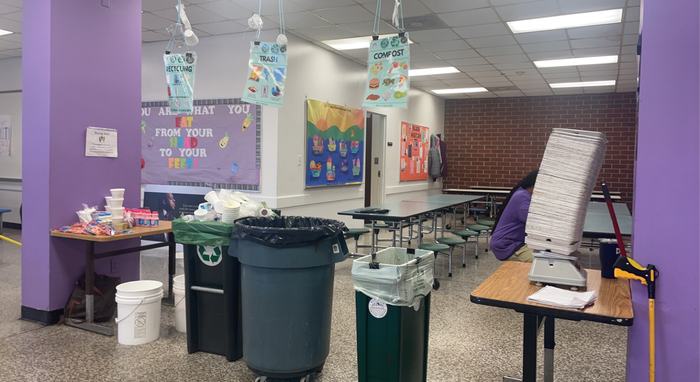
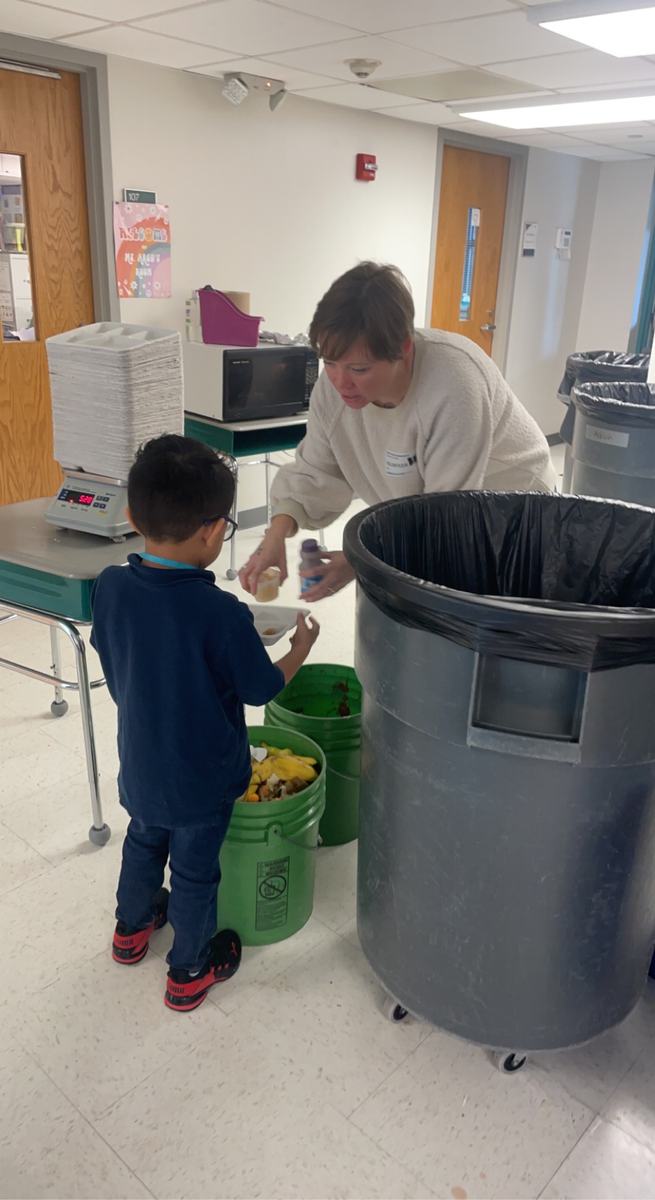
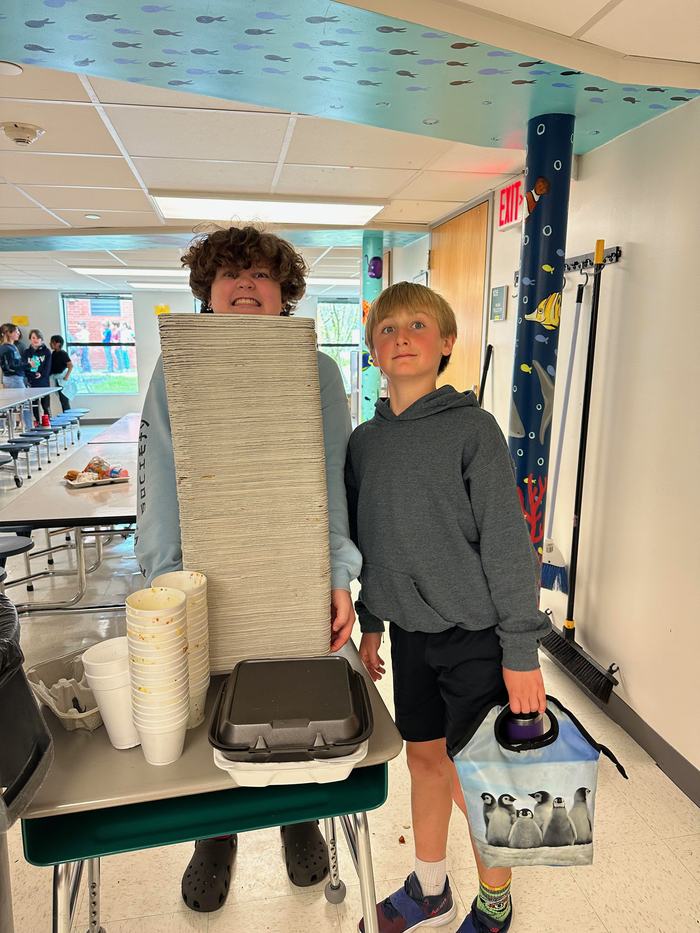
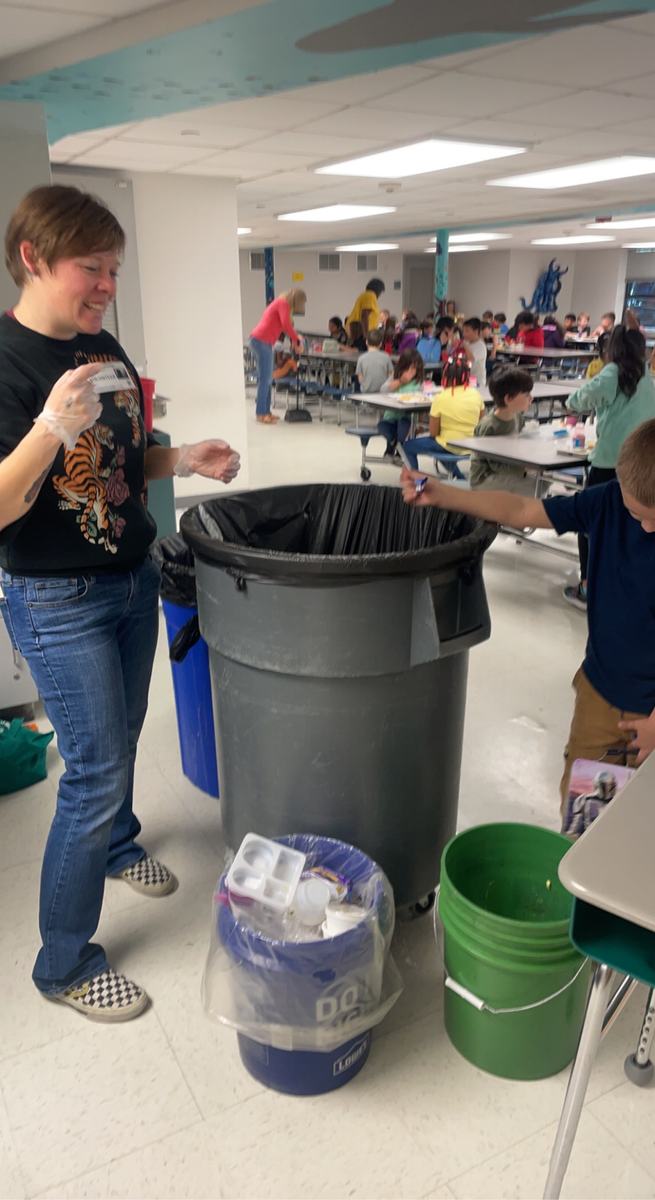
Garbage to Gardens, a school composting program, is growing in New Hanover County! The USDA recently granted New Hanover County a two-year Food Waste Reduction grant for $180,000 to operate and expand Garbage to Gardens. For the past year the N.C. Cooperative Extension and Friends of the New Hanover County Arboretum sponsored the program, which operates at DC Virgo Preparatory Academy and Winter Park Elementary School. Participating schools set up waste diversion stations in the cafeteria for students to separate liquids, recycling, compost, and trash. Students also stack trays to conserve space hauling the waste, and a share table is utilized for unopened, nonperishable items.
Children love practicing waste diversion habits, and learning how to properly discard their “trash.” The concept of throwing something “away” is archaic and obsolete. Landfill space is limited and at a high cost, financially and environmentally. Schools should be teaching students to recycle and compost, as well as the benefits of conserving those resources. Garbage to Gardens engages students with systems thinking, enabling them to connect the processes by which food is produced, transferred, consumed and wasted/conserved.
Additionally, environmental education and other learning opportunities are endless with Garbage to Gardens. The program allows students to learn interdisciplinary subjects with relevance to their lives. A scale in the cafeteria lets students make predictions and solve equations to figure out how many trays are discarded, or how many pounds of food are diverted from the landfill.
The generous grant this past year from Friends of the Arboretum allowed Garbage to Gardens to also work with Ms. Weeks, a 4th grade teacher at Winter Park Elementary School who selected Garbage to Gardens for her emerging leadership project. Throughout the 2022-2023 school year Ms. Weeks established student composting in the classrooms, and allowed Garbage to Gardens time to implement lessons and scientific experiments.
The Garbage to Gardens program coordinator, Kat Polk, also conducted a Soil Your Undies science experiment during Spring 2023 in aftercare programs hosted by the City of Wilmington. Students enjoyed seeing firsthand how organic materials can break down over time based on the soil type and presence of decomposers. Throughout 60 days students predicted a hypothesis, analyzed variables that may affect the cotton’s decomposition, and measured the final results. This experiment in the aftercare programs reiterated that regardless of age, the Garbage to Gardens program enriches the education of all students.
Now that the N.C. Cooperative Extension and NHC Arboretum Center successfully piloted the program, Garbage to Gardens is shifting to New Hanover County's Department of Recycling and Solid Waste. The goal for the USDA grant is to sprout into 18 New Hanover County schools by 2025. With a 95% waste diversion rate when the program is implemented, Garbage to Gardens has the potential to both extend the lifespan of our landfill as well as to teach students valuable lessons about resource conservation and living sustainably.
A heartfelt thank you to the Friends of the Arboretum and the N.C. Cooperative Extension for your dedication and support to launching this important program.